
How a riso sleeve gets made
It was the blue, and Wren was told so within about ninety seconds of walking in.
What follows is the run that came out of that conversation, photographed at each of the stages where it could still have gone differently.
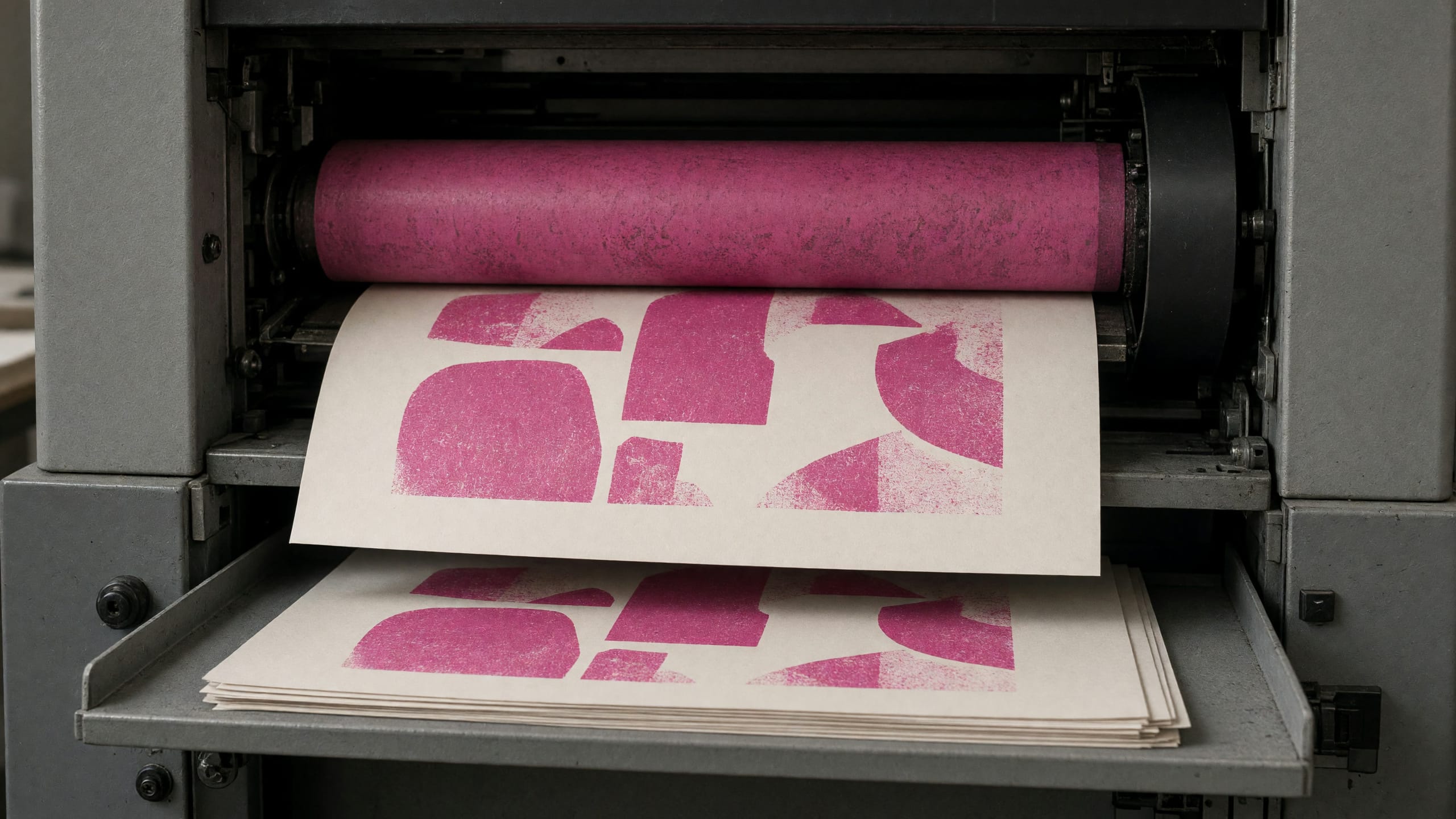
A risograph is a photocopier that thinks it is a printing press. Ink is pushed through a stencil wrapped round a rotating drum, one colour per drum, one pass per colour. To print two colours you print the whole run in the first colour, swap the drum, and put the same sheets through again.
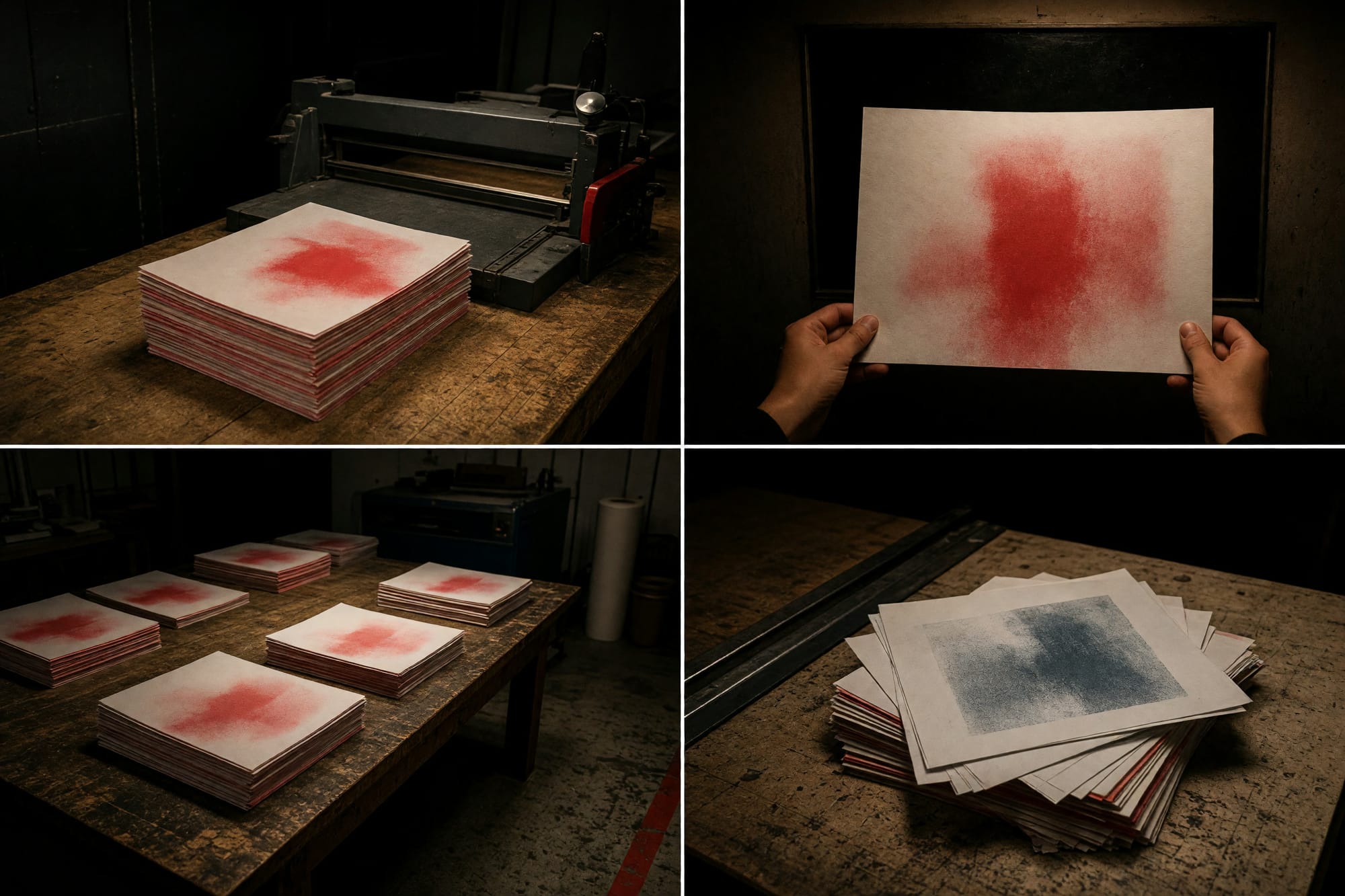
That second pass is where everything interesting happens, because paper that has been through a machine once is not the same shape as paper that has not. It has picked up moisture, it has picked up a curl, and it goes through fractionally differently. The second colour lands one or two millimetres from where the file says it should, and it lands differently on sheet four than on sheet fifty.
That is misregistration, and it is the reason people use this process rather than a reason to avoid it.
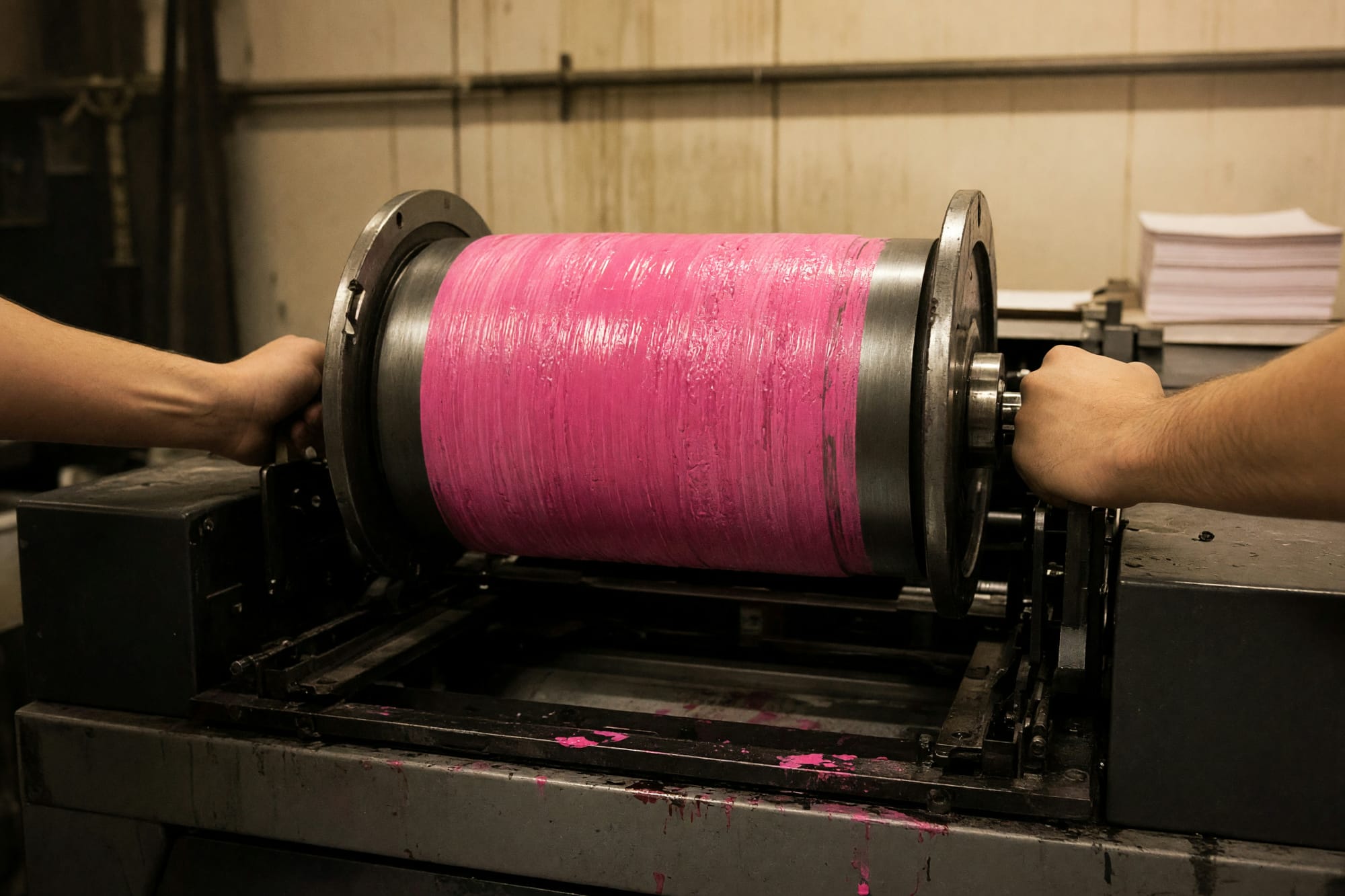
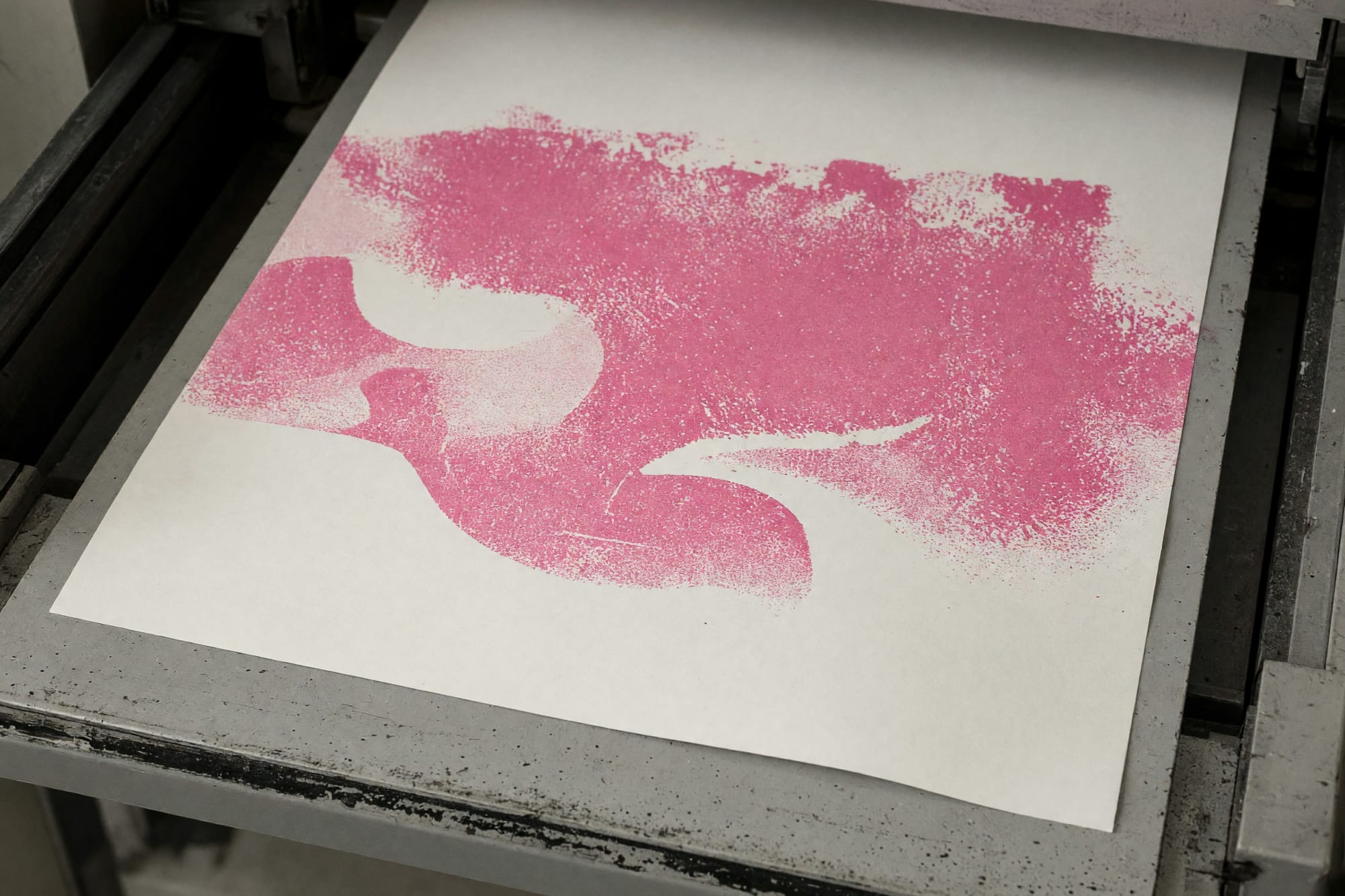
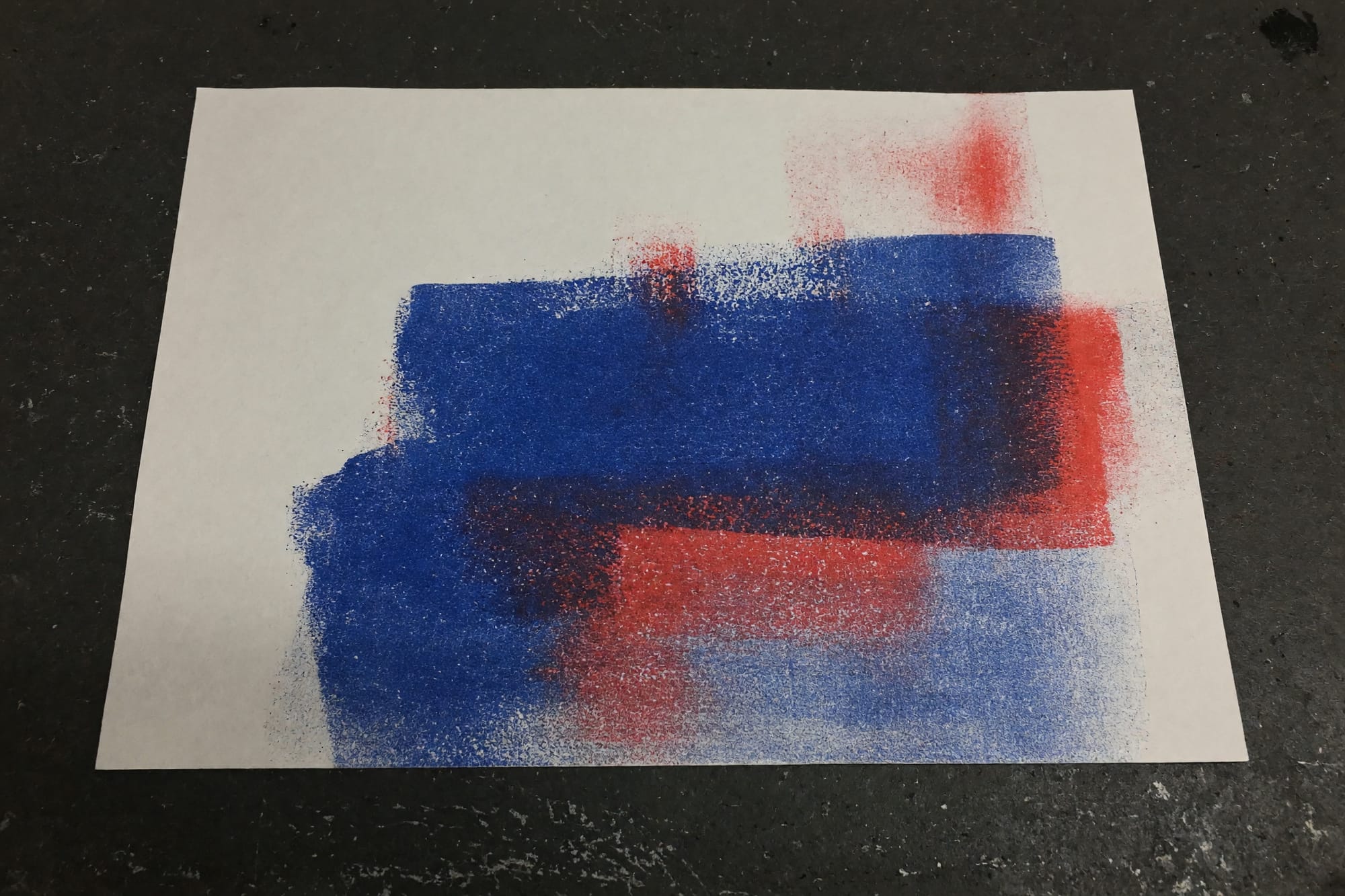
The decision a designer makes on a riso job is how much of it to hand over. You can design so that a two-millimetre shift is invisible — keep the colours apart, never let an edge depend on an edge. Or you can design so that the shift is the image: overlap the two blocks deliberately, accept that the overlap will be a different width on every copy, and print sixty things that are not the same thing.
The second is more interesting and it stops being interesting at a very specific point, which is when the misregistration starts destroying legibility rather than decorating it. On this job that point was about four millimetres, and the printer knew it before we did.
| Stock | 170gsm uncoated, off-white, long grain |
|---|---|
| Inks | Fluorescent pink, then blue. Pink first, always — it is the more transparent |
| Run | 60 copies, of which 54 were usable |
| Passes | 2 |
| Cost per copy | $4.20, including the six that failed |
| Time | One afternoon, plus overnight to dry before the second pass |
The six that failed all failed on the second pass, all in the last twenty sheets, all because the drum had warmed up and was laying down more ink than it had been at the start. This is normal. You print sixty to get fifty-four, and if you need fifty-four you print seventy.
He looks at the file for about four seconds and says: the blue will be wrong at the top left, we can move it or you can like it. That is the entire consultation and it is worth more than an hour with anyone else.
Member discussion