
How we count this
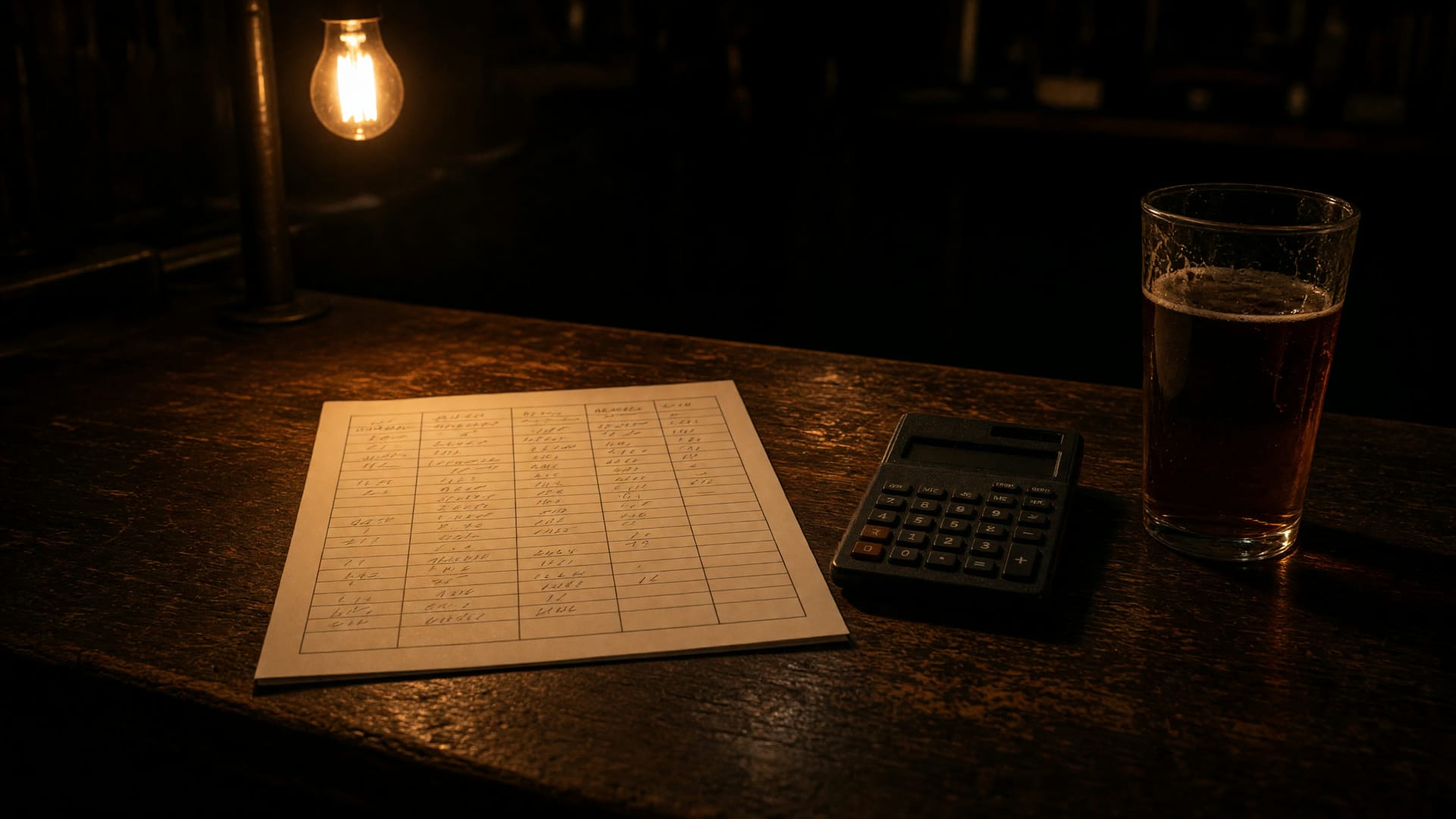
The Rider prints numbers, so it owes you a method.
What follows is standing policy rather than a statement of intent, and in the two places we have broken it we have said so in the piece where it happened.
Where do the figures come from?
The band, in almost every case, usually as a photograph of a settlement sheet or a screenshot of a bank line. Where a figure comes from a promoter or a venue instead, the piece says so. We do not use figures given to us by a third party who was not in the transaction.
Do you verify them?
Against a document, wherever a document exists — a settlement sheet, a contract, a receipt. Where none exists, which is common at the small end because a door split is frequently cash and a handshake, we say the figure is unverified in the piece. Roughly a fifth of what we print is unverified and marked as such.
What counts as a cost?
Anything the band would not have spent if the show had not happened. Fuel, van hire, parking, train fares, accommodation, replacement strings and heads, and the venue's merch percentage. Not: gear they already own, rehearsal they would have done anyway, or their time.
Why are bands anonymous sometimes?
Because a band that publishes what a promoter paid it is a band that does not get offered the next one. We would rather print six anonymous accurate figures than three named ones and cost somebody work. Where a band is named it is because they asked to be or agreed to be after we asked twice.
What do you exclude?
A band's own time, always — see above. Any figure we cannot get from the person who received it. And any show where the fee was bundled with something else, like a recording session or a festival package, because unbundling it would mean estimating, and an estimate in a table of real numbers contaminates the whole table.
What have you got wrong?
Twice, and both are in the corrections table. See the note below — they are worth stating here rather than only there, because a method page that does not admit its own failures is a brochure.
| We count | We do not count |
|---|---|
| Fuel, van hire, parking, fares | The band's own time |
| Accommodation | Gear already owned |
| Consumables replaced for the show | Rehearsal that would have happened anyway |
| The venue's merch percentage | Anything from a third party to the transaction |
| Agent commission, where there is an agent | Bundled fees that would need unbundling |
| Fees given to us with a document | Estimates of any kind |
Member discussion