
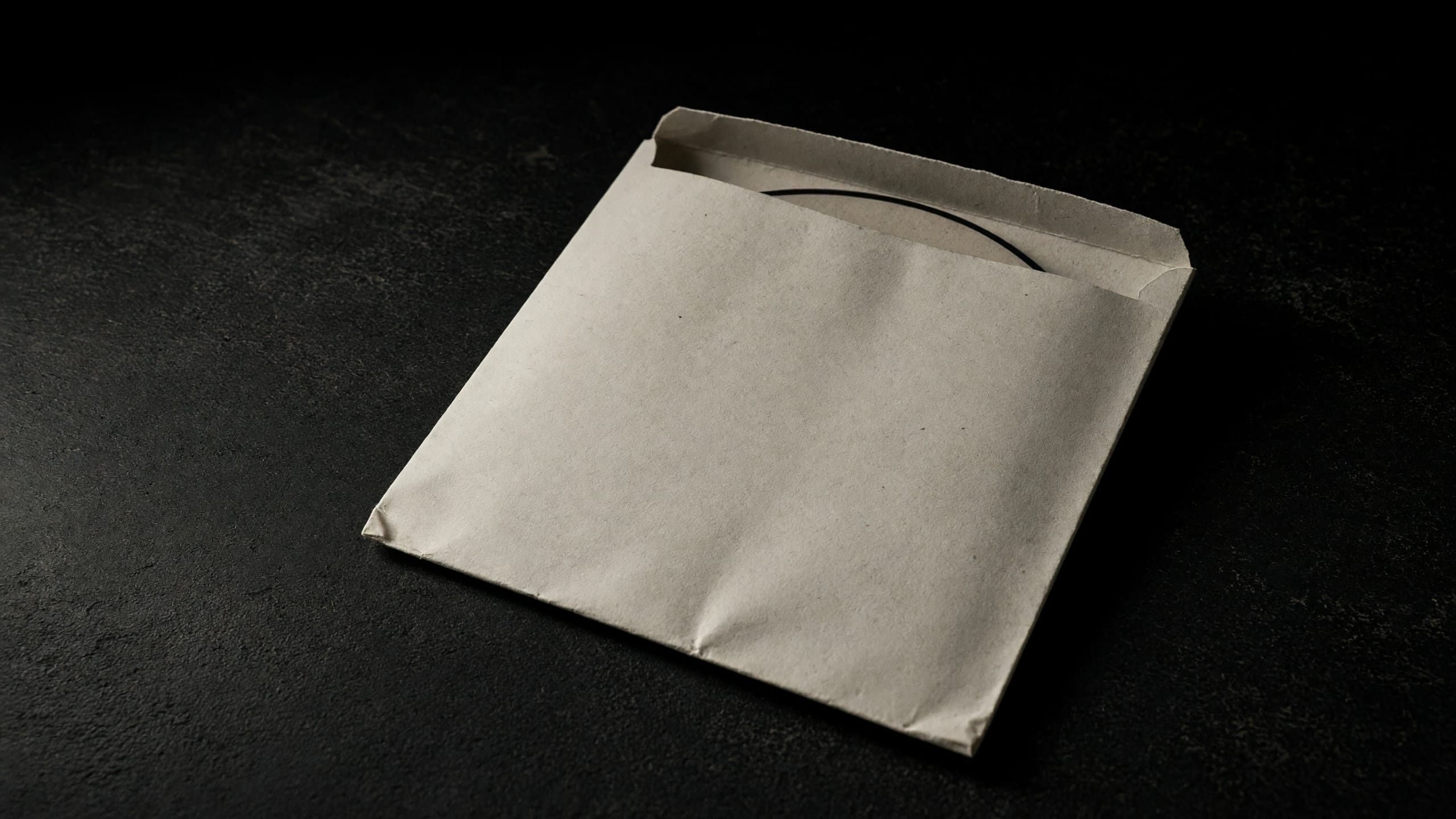
In praise of the inner bag
A paper inner sleeve costs a few cents. A poly-lined one costs a few cents more.
Across a short run the difference is less than a single artwork revision that nobody thought twice about, and it is the only choice in the whole package anyone will still be able to hear in twenty years.
An inner bag costs between four and nineteen cents. On a run of five hundred that is a difference of seventy-five dollars, against a total manufacturing cost of somewhere near four thousand. It is, in every meaningful sense, free — and it is the first thing cut, on almost every small-label release, because it is the only line on the quote that looks optional.
Here is what it actually does. A record is soft. The groove wall is a few microns of vinyl and it deforms under very little force. Nothing in normal handling damages it except two things: dust that gets dragged through the groove by the stylus, and the sleeve.
Plain paper is the problem. Paper is made of fibres, the fibres are harder than vinyl at the scale that matters, and every time the record goes in or out of a plain paper bag the surface is very lightly abraded. Once is nothing. Four hundred times is the faint grey haze you see on a well-loved record from 1979, and that haze is audible as a raised noise floor before the record has a single visible scratch.
| Type | Cost per unit | What it is | What it does to the record |
|---|---|---|---|
| Plain paper | $0.04 | Uncoated kraft | Abrades the surface slightly on every insertion |
| Poly-lined paper | $0.11 | Paper with an HDPE liner | Nothing. This is the correct answer |
| Rice paper | $0.09 | Thin, soft, antistatic-ish | Good, and tears |
| Bare polythene | $0.19 | No paper at all | Good, and sticks to the record in heat |
Poly-lined is eleven cents. It has been eleven cents for years. There is no argument against it that survives contact with the number.
Spend four extra cents or accept that you are selling somebody an object that gets worse every time they use it as intended.
Three of the labels we cover moved to poly-lined in the last two years, and all three did it after somebody complained about surface noise on a repress. One has not moved and will not say why, which we assume means the quote is bundled and nobody has unbundled it.
The other thing a poly-lined bag does, which nobody mentions, is that the record goes back in without a fight. A record that is annoying to put away gets left out, and a record that gets left out gets damaged by something much worse than paper.

Member discussion