
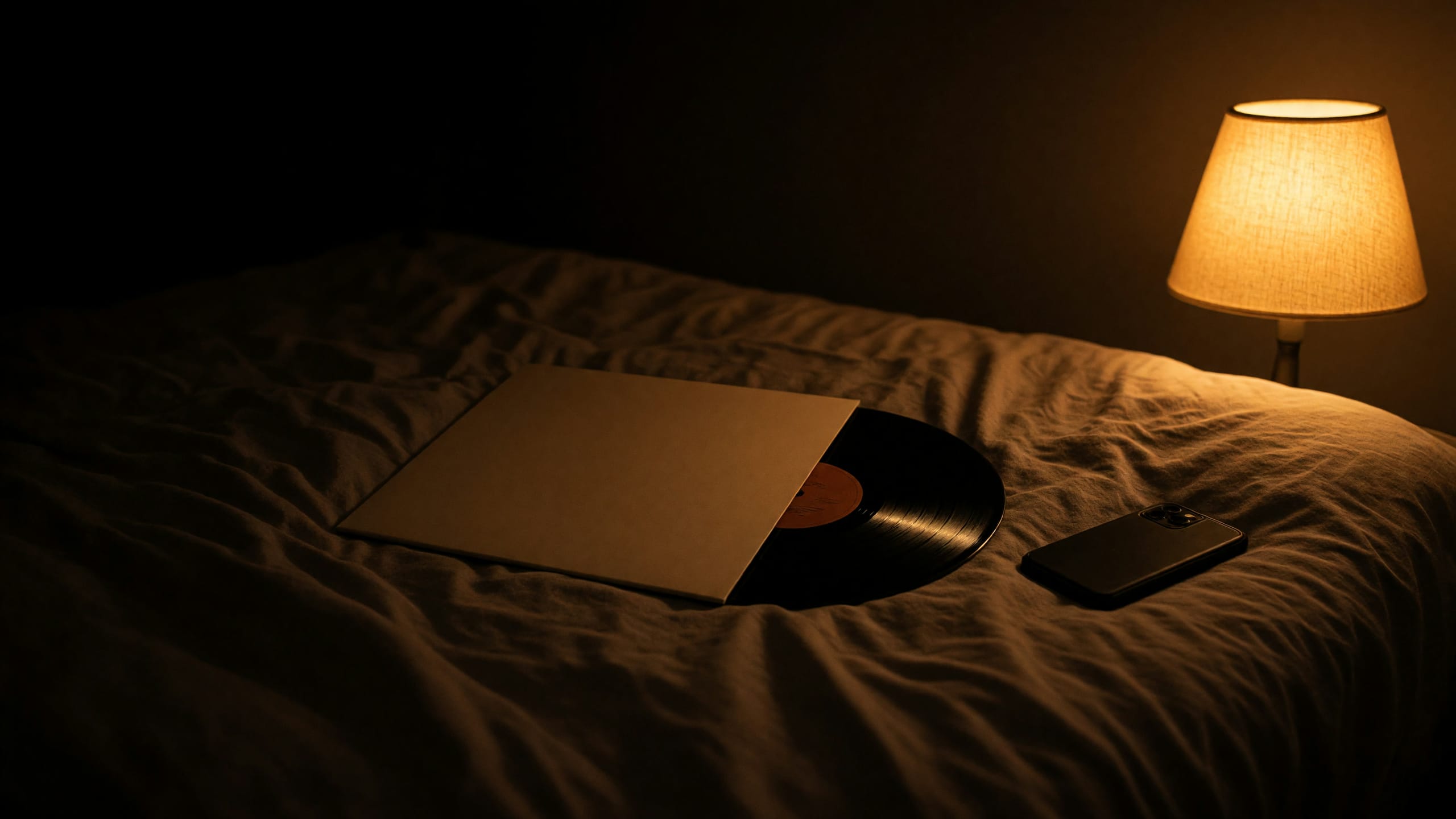
How we hear a record now
This is not a complaint about attention spans. That version of the argument gets written every eighteen months and is always, on inspection, about somebody younger than the person writing it.
It is about what a band does with side two once they have accepted that most people are not going to reach it.
The second side
Side two exists because of a physical limit. About twenty-two minutes of music fits on one side of a twelve-inch at thirty-three revolutions a minute before the grooves get too close together and the bass has to come down. Everything anyone believes about sequencing descends from that.
What the limit produced was a shape. Side one opens hard and closes on the best song. Side two opens on something stranger, because you have already got the listener up out of the chair once and they have chosen to come back, and it closes on the long one. Nobody wrote this down and everybody knew it.
Then the constraint went away, and the shape stayed, and for about twenty years nobody noticed that it had stopped meaning anything.
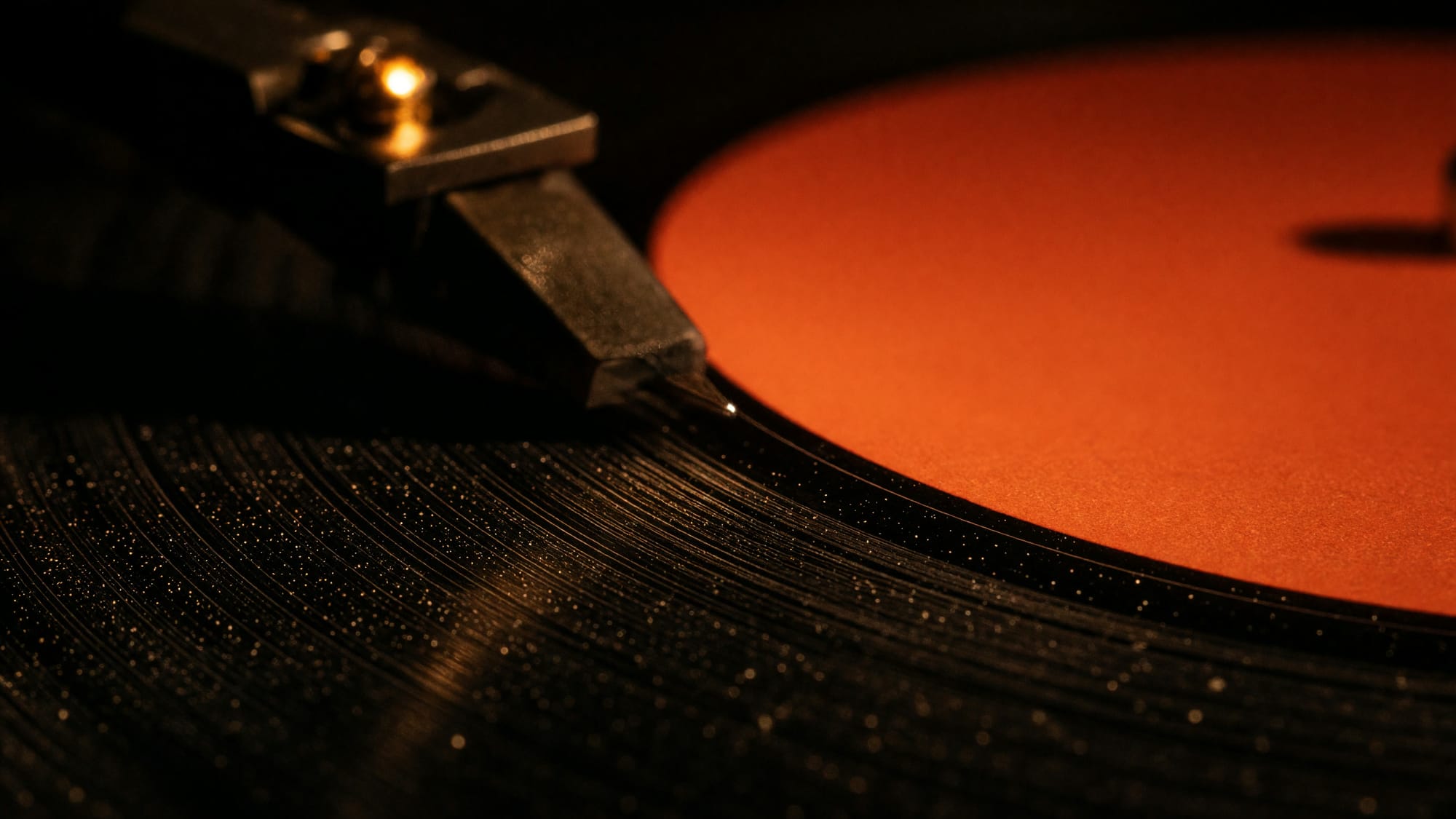
A record is made in an order that almost nobody hears it in. That is a strange thing to have become normal and an even stranger thing to have stopped mentioning.
What bands do about it
Three responses, all of which we have watched happen in the last two years.
Front-loading. Put the three best songs first, on the reasoning that the median listener will not reach track four. This works, in the narrow sense that more people hear the good songs, and it produces records that collapse in the second half — which is not a coincidence, it is the design.
The shorter record. Twenty-eight minutes, eight songs, no filler because there is no room for filler. Perennial Static's Nine Fields is thirty-eight and reads as short. This is the response we find most convincing and the one that costs a band the most, because you cannot make a twenty-eight minute record out of the forty minutes you have written; you have to throw away twelve minutes you like.
Refusing to release singles. The whole thing, on one day, or nothing. Two bands we cover do this. Both have smaller audiences than they would otherwise have, and both would tell you that is the point, and one of them is lying.
The counter-argument
The counter-argument deserves better than we usually give it, so here it is properly.
Nobody listened to side two in 1974 either. People put a record on at a party and took it off after four songs. People bought albums for one single and played that single. The idea of an audience sitting in reverent silence through forty minutes in running order is a thing that happened sometimes, to some records, and has been retrospectively applied to all of them by people who were not there.
The romance of the format is real but it is mostly a romance about a small number of records that genuinely rewarded it.
We think the counter-argument is about sixty per cent right, and that the remaining forty per cent is where all the interesting music is.
 Wren Ashgrove

Member discussion